
Vertel uw vrienden over dit artikel:
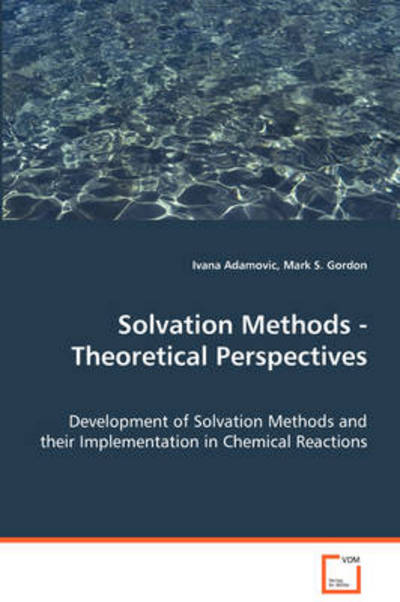
Solvation Methods - Theoretical Perspectives: Development of Solvation Methods and Their Implementation in Chemical Reactions Mark S. Gordon
Besteld in een afgelegen magazijn
 Kerstcadeautjes kunnen tot en met 31 januari worden ingewisseld

Onze klanten zeggen:


Solvation Methods - Theoretical Perspectives: Development of Solvation Methods and Their Implementation in Chemical Reactions
Mark S. Gordon
This work consists of two closely related parts: theory development and coding of correlation effects in a model solvation potential and study of solvent effects on chemical reaction. The effective fragment potential-EFP method has been re-parameterized, using density functional theory-DFT. The DFT based EFP method includes short-range correlation. The new method has been implemented in the electronic structure code GAMESS. Formulas for the dynamic dipole polarizability, C6 dispersion coefficient and dispersion energy were derived and coded as a part of a treatment of the dispersion interactions in the general solvation model, EFP2. Results are in good agreement with experimental and theoretical data. The DFT based EFP method was used in the study of microsolvation effects on the SN2 substitution reaction. EFP1/DFT is found to reproduce QM results with high accuracy. Molecular structures and potential energy surfaces for IHI- ¿¿¿ Arn (n=1-7) were studied using the MP2. Observed trends in the structural arrangement of the Ar atoms were explained through the analysis of the geometrical parameters and MP2 electrostatic potentials.
| Media | Boeken Paperback Book (Boek met zachte kaft en gelijmde rug) |
| Vrijgegeven | 6 oktober 2008 |
| ISBN13 | 9783639076059 |
| Uitgevers | VDM Verlag |
| Pagina's | 174 |
| Afmetingen | 150 × 220 × 10 mm · 244 g |
| Taal en grammatica | Engels |
